





Albert Ernst Bosman (1891-1961) spent thousands of hours drawing, mathematics, research, beauty and wonderment are united in the patterns he brought to life with pencil, compass and ruling pen.
His drawings had almost been forgotten, hidden away in boxes in attics; this book, however, brings them back into the light of day. The drawings challenge you to look closely and with care, to ask questions and to think further — as do the drawings made by his friend and opposite neighbour Maurits Escher.
What happens when lines keep repeating themselves? Where does the finite touch the infinite?
hardcover with dust jacket
140 pages
Dutch & English
full color
Individually numbered copies from a print run of 500
ISBN 978-90-9039855-6 / NUR 640
€ 44,95
About Bosman

Drawing with Mathematics opens a window into the mathematical and whimsical mind of Albert E. Bosman. These new insights about Bosman not only enrich our knowledge of his own works but also provide a broader context concerning the circle that had formed around the graphic artist M.C. Escher, Bosman’s famous opposite neighbour.
– Judith Kadee, curator of ‘Escher in Het Paleis’
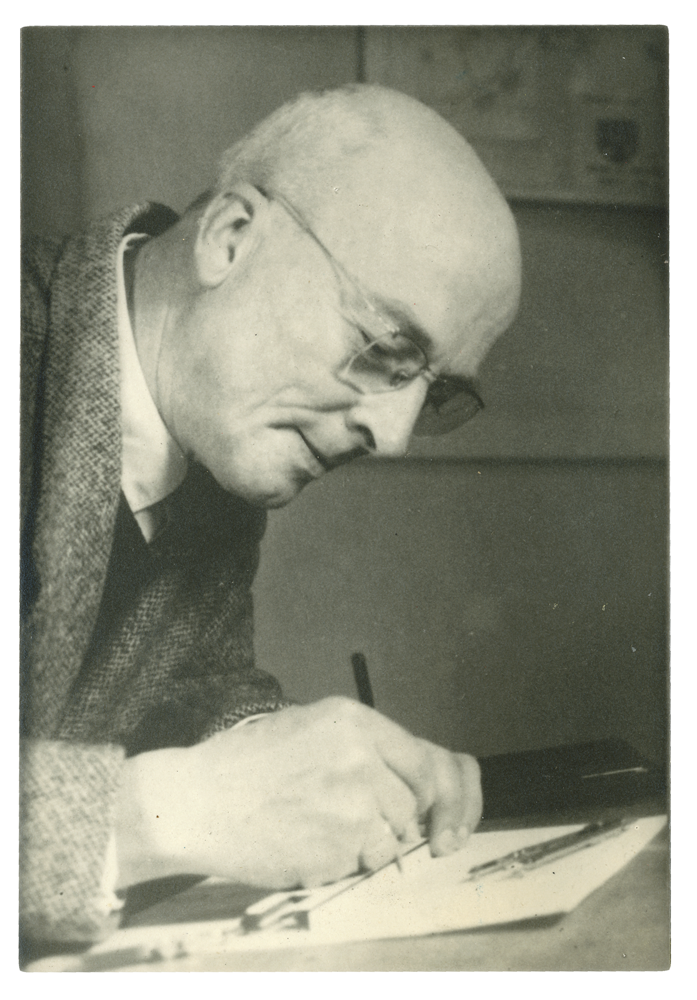
About Bosman
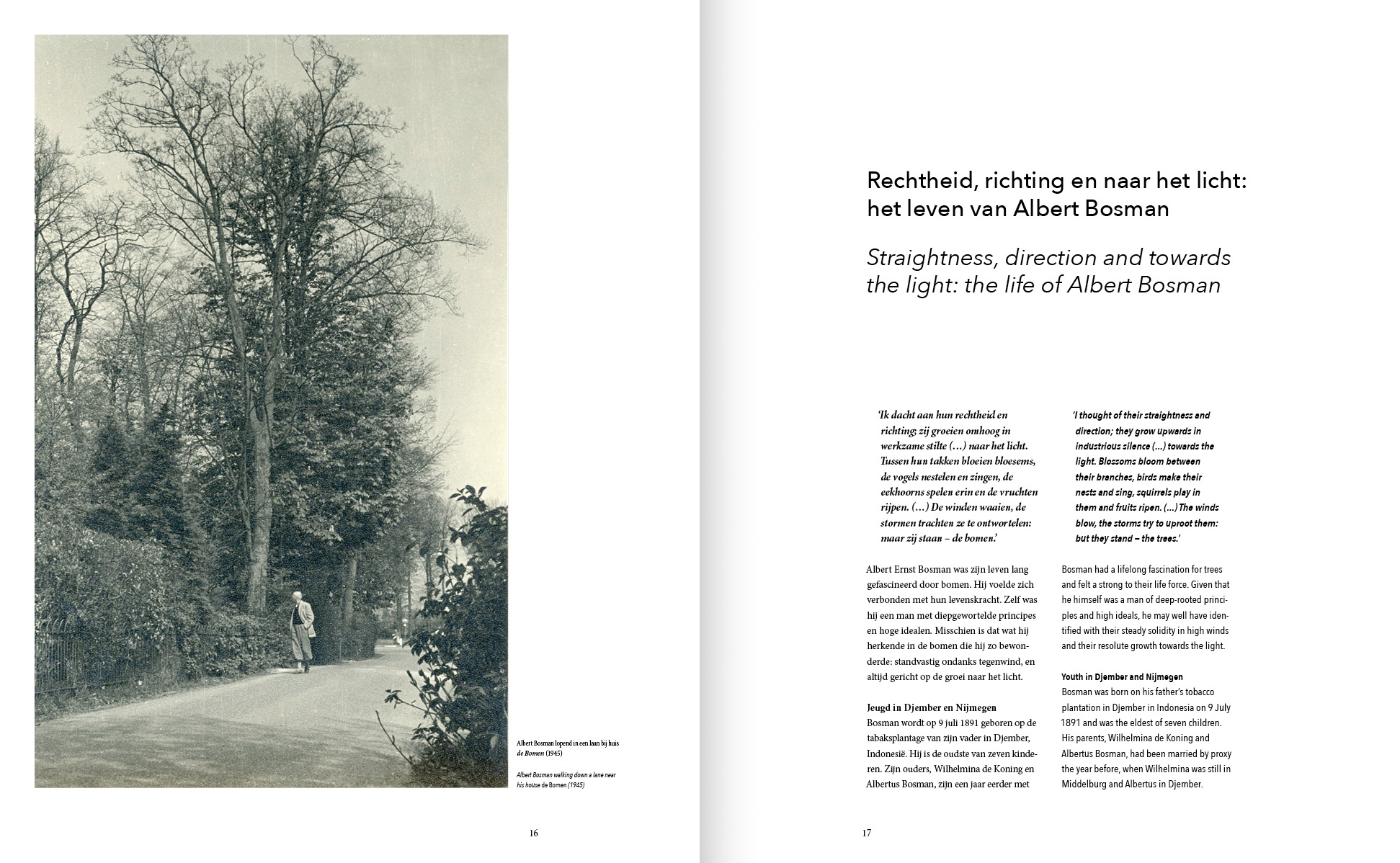
Albert Ernst Bosman (1891-1961) was a man of deep-rooted principles and high ideals. He studied electrical engineering in Delft and afterwards worked as an engineer and a teacher of mathematics in alternation. His broad range of interests led him to immerse himself in world religions, philosophy, psychology and educational innovation. He and his family moved to Baarn in the mid-1930s, where Maurits Escher was to become his opposite neighbour towards the end of 1944.
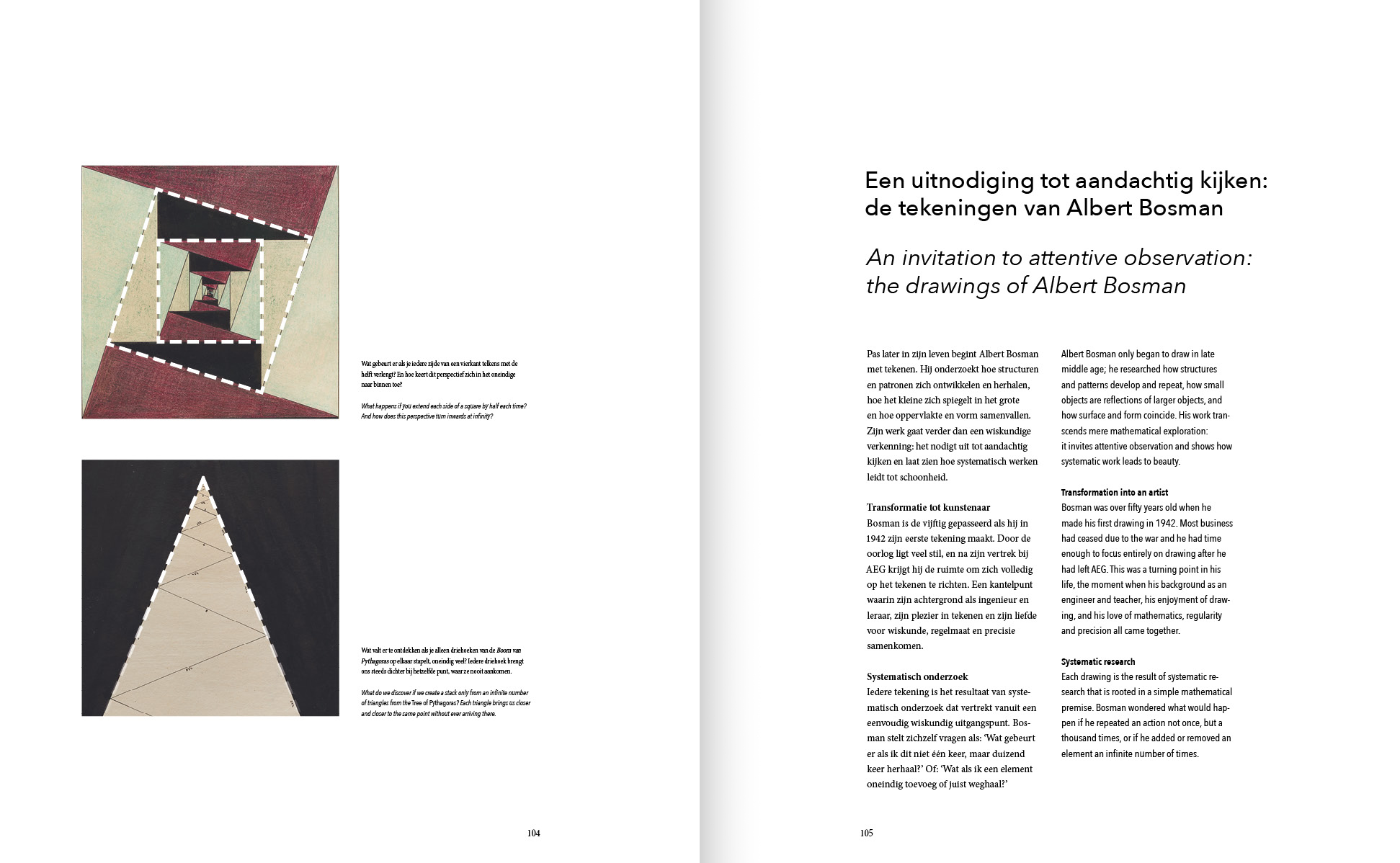
Bosman was already over fifty years old when he created the Tree of Pythagoras, his first drawing, in 1942. The Second World War had brought normal life practically to a standstill and gave him space and time to focus entirely on his drawing. His technical background, his love of mathematics and his sense of order and precision all combined towards a common goal. In 1957, His book Het wondere onderzoekingsveld der vlakke meetkunde (The wondrous field of investigation of plane geometry) contained a large quantity of his drawings and was published in 1957.
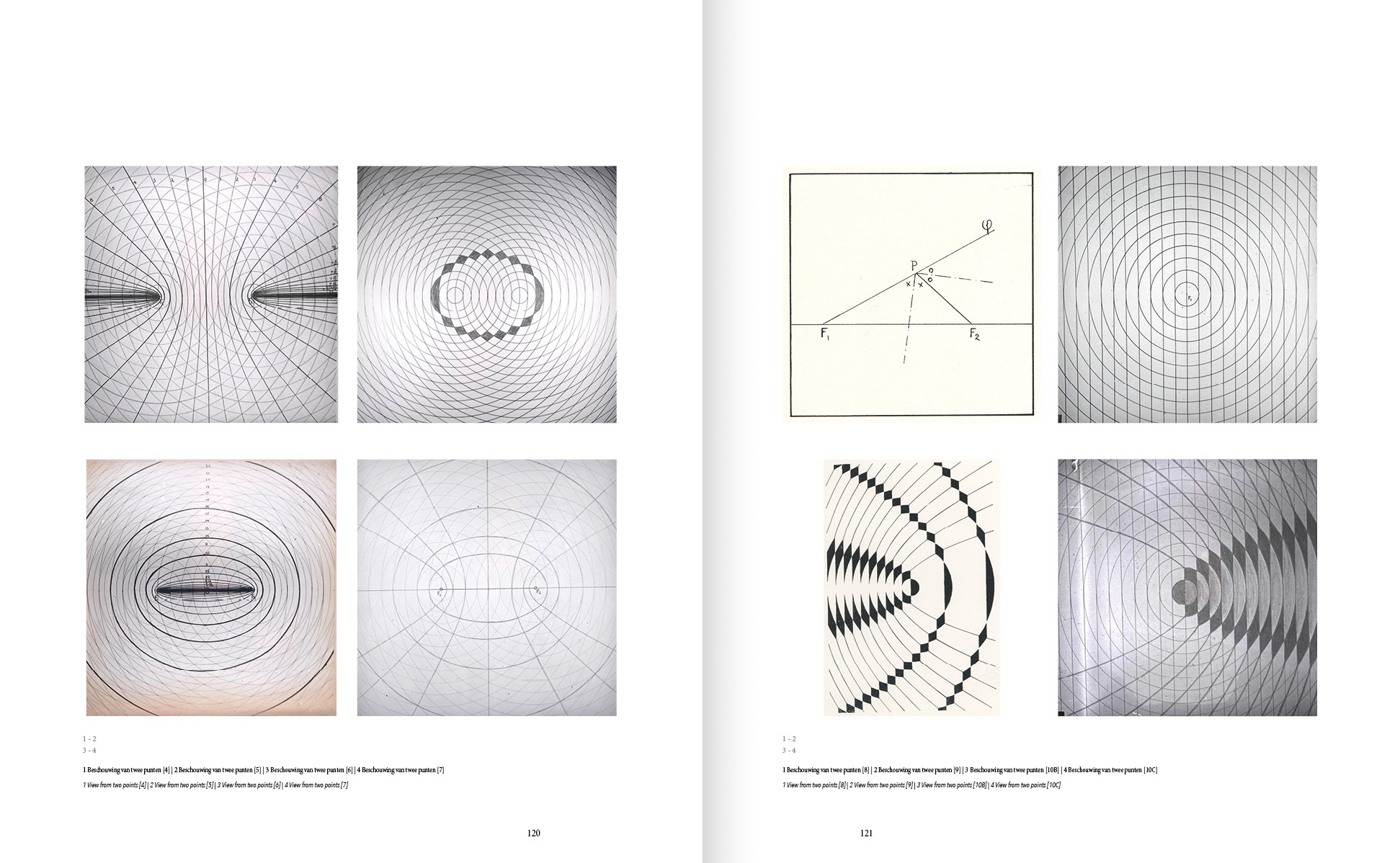
Bosman explored how structures and patterns develop and repeat, how small elements mirror the larger, and how surface and form coincide. His drawings are more than mathematical explorations: they call for our careful observation and show how systematic work leads to the impressive patterns that we see reflected everywhere in nature.
Bosman became friends with Escher, his opposite neighbour. Both men loved astronomy, Bach and mathematics; they were both fascinated with the means of imagining infinity on paper and had long conversations about it together.
Bosman's drawings gradually disappeared into boxes hidden in attics after his death. His grandson Fernand Bosman took the initiative to trace all of his works and have them restored, a deed that resulted in the book Drawing with Mathematics and in the exhibition M.C. Escher & Albert E. Bosman: A Mathematical Connection, on view in Escher In Het Paleis in The Hague from 21 February to 15 June 2025. Ten drawings by Bosman are displayed alongside prints of Escher’s drawings that Escher himself had presented to the Bosman family.
The often highly complex patterns are set down and sometimes coloured in with an amazingly steady hand. Then come the best moments, […] when something arises that transcends craftsmanship.
It is a wonderful convergence of the concepts of infinity and limitation as a paradoxical and yet existential constant.
– Hans Locher